Mistakes Are Opportunities Worksheets Results
Mistakes as Opportunities for Learning - Positive Discipline
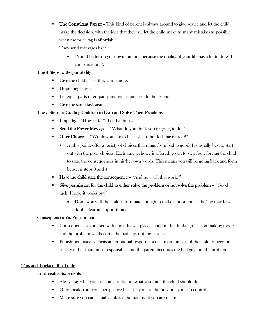
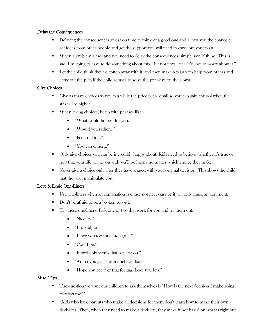
1. Whenever possible, share your own mistakes. 2. If you don’t make mistakes, fake it to model the fun of leaning form mistakes. 3. Teach the 4 R’s of Recovery from Mistakes to your students. 4. If the mistake requires amends or finding a solution, engage the student (or the whole
https://url.theworksheets.com/6gkl191 Downloads
Preview and Download !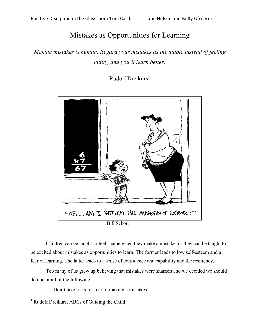
Learning from Our Mistakes: International Educators Reflect
Most clearly, mistakes make way for important learning and innovation, because they take us outside of normal pathways. Making room for mistakes creates a culture of support and camaraderie. Mistakes can set off a line of thinking that opens up new ways of thinking about an issue. Mistakes and learning in International Education.
https://url.theworksheets.com/dipq38 Downloads
Preview and Download !
The significance of dealing with mistakes for student ... - pedocs
students try to avoid making mistakes in public because of perhaps being negatively evaluated by the teacher or their peers. In such cases, the potential of learning from mistakes cannot be realized because mistakes are not seen as learning opportunities but potentially harmful for self-related beliefs (Ames and Archer 1988; Oser
https://url.theworksheets.com/dips49 Downloads
Preview and Download !
Learning from errors: A model of individual processes - ed
may, in particular, provide learning opportunities (Van Lehn, 1988). Recent research findings in educational psychology and contemporary cognitive psychology (e.g. Cyr & Anderson, 2014; Van Lehn, Siler, Murray, Yamauchi, & Baggett, 2003) give reason to revisit ancient wisdoms like “Mistakes are the stepping stones
https://url.theworksheets.com/d56z49 Downloads
Preview and Download !
Worksheet on Idioms - crestolympiads.com
potential opportunities and making informed decisions to avoid repeating past mistakes. a. once bitten, twice shy b. once in a blue moon c. cost an arm and a leg d. call it a day 2. When you need to discuss something important, it's best not to_____, as they may be stressed or preoccupied with other matters, hindering effective communication. a.
https://url.theworksheets.com/dipt35 Downloads
Preview and Download !
Parenting with Love & Logic - Lewis Center for Educational Research
Set limits using enforceable statements, regard mistakes as learning opportunities, and resist the temptation to nag. When children misbehave and cause problems, adults hand these problems back in loving ways. Provide empathy before describing consequences, use few words and more loving actions, delay consequences when
https://url.theworksheets.com/1aow38 Downloads
Preview and Download !
Ally Up! Practice Effective Allyship - Cornell University
almost certainly going to make mistakes. When you’re criticized, use that feedback to ensure you won’t make the same mistakes in the future. • Recognize that acting as an ally shouldn’t require an audience or getting credit/praise. • Understand the importance of giving something up to ensure that opportunities and
https://url.theworksheets.com/3otx439 Downloads
Preview and Download !
Grades 9 to 12 • Self-Esteem - KidsHealth
a. View mistakes as learning opportunities b. Don't accept anything less than perfection c. Remind yourself that everyone excels at different things d. Keep your opinions and ideas to yourself e. Recognize what you can change and what you can't 10. True or false: Ideal media images of celebrities and their bodies can affect self-esteem.
https://url.theworksheets.com/2dja229 Downloads
Preview and Download !
WORKING THROUGH THE CLUTTER - Anxiety and Depression Association of ...
Guidelines Around Engaging Clutter DO: Imagine yourself in the client’s position Model positive, adaptive behaviors Provide encouragement and emotional support Share your opinions when asked Believe in the client’s ability Highlight strengths Stay calm Take care of yourself DON’T: Use judgmental language Touch belongings without
https://url.theworksheets.com/1fq342 Downloads
Preview and Download !
Common Grammar Mistakes - Blinn College
Common Grammar Mistakes Blinn College – Bryan Writing Center Spring 2023 Page 2 of 6 Examples: • The current was swift ^ he could not swim to shore. • Klees paintings seem simple ^ they are very sophisticated. • She doubted the value of meditation ^ she decided to try it once.
https://url.theworksheets.com/5pwx195 Downloads
Preview and Download !
<< Previous results Next results >>